
Jump To
Walk into any auto parts store or browse any tool catalog and you will see sockets and wrenches labeled as either 6-point or 12-point. For a beginner, the choice seems cosmetic. For a working mechanic, it can be the difference between a clean removal and a rounded-off fastener that turns a 10-minute job into an hour-long ordeal.
This guide breaks down the real-world differences between 6-point and 12-point sockets and wrenches, explains when each type is the better choice, and covers why impact sockets are almost always 6-point.
What Are 6-Point and 12-Point Sockets?
The geometry inside the socket determines how it grips the fastener

The “point” number refers to the shape of the opening inside the socket or wrench head. A 6-point socket has a hexagonal opening — six flat walls that match the six flat sides of a standard hex bolt or nut. A 12-point socket has a double-hex (bi-hex) opening with 12 smaller walls arranged in a star-like pattern.
This seemingly small difference in geometry has a significant impact on grip strength, torque transfer, and how easily you can position the tool on a fastener in tight spaces.
6-Point (Hex) Design
Each of the six internal walls contacts a full flat of the fastener. This means the load is spread across a larger surface area, and force is applied to the flats rather than the corners of the bolt head. The result: more grip, more torque capacity, and significantly less chance of rounding off the fastener.
12-Point (Bi-Hex) Design
The 12-point socket has twice as many contact points, but each one is smaller. The internal walls contact the corners of the fastener rather than the flats. This creates a higher concentration of stress on the corners, which is perfectly fine for standard-torque work but becomes a liability when dealing with high loads, corrosion, or impact tools.
6-Point vs 12-Point: Side-by-Side Comparison
How the two designs stack up across every metric that matters
When to Use 6-Point Sockets & Wrenches
The default choice for most professional and heavy-duty applications
If you could only own one type of socket, make it a 6-point. The full-flat grip means it can handle essentially any situation a 12-point can, with the added benefit of higher torque capacity and bolt protection. Here are the scenarios where 6-point is the clear winner:

Impact Wrench Work
Air and cordless impact wrenches deliver rapid, high-force hammer blows. A 12-point socket under impact force concentrates that energy on the bolt’s corners, dramatically increasing the chance of rounding. Virtually all quality impact socket sets are 6-point for this reason. If you are using an impact wrench, use a 6-point impact socket — no exceptions.
Rusted, Seized, or Corroded Fasteners
Corrosion weakens the corners of a bolt head. A 12-point socket applies force directly to those already-weakened corners, almost guaranteeing you will round off the fastener. A 6-point socket grips the flats, distributing the breaking force across stronger surfaces. For any fastener that shows signs of rust or corrosion, always reach for a 6-point.
High-Torque Applications
Suspension bolts, axle nuts, lug nuts, exhaust manifold studs — anything that requires a breaker bar or a long-handle ratchet benefits from the superior grip of a 6-point socket. The higher the torque, the more the flat-contact advantage matters.
Soft or Aluminum Fasteners
Aluminum drain plugs, brass fittings, and other soft-metal fasteners are especially prone to rounding. The concentrated corner loads of a 12-point socket can deform them with surprisingly little torque. Use a 6-point to protect the fastener.
Pro Tip
Many professional mechanics keep a full set of 6-point sockets for regular use and add 12-point sockets only for specific situations. If you are building your first socket set, start with 6-point.
When to Use 12-Point Sockets & Wrenches
The specialist choice for access and convenience
Despite the advantages of 6-point sockets, 12-point designs are far from obsolete. There are legitimate situations where a 12-point socket or wrench is the better tool:
Tight and Confined Spaces
This is where 12-point sockets truly shine. Because the socket engages the fastener every 30 degrees (versus 60 degrees for 6-point), you need only half the swing arc to reposition the ratchet. In an engine bay where you can barely move the ratchet handle 15 or 20 degrees at a time, a 12-point socket lets you actually make progress where a 6-point would have you stuck.
Quick Engagement
With twice as many engagement points, a 12-point socket slips onto a fastener more easily. When you are working overhead, in the dark, or by feel, the 12-point socket is noticeably faster to seat. This is also an advantage on assembly lines and in production environments where speed matters.
12-Point Fasteners
Some OEM fasteners — particularly on European vehicles (BMW, Mercedes, Audi) and certain heavy equipment — are actually 12-point bolts (also called bi-hex or double-hex). A 6-point socket will not fit these at all. You need a 12-point socket to service them. Check your vehicle’s service manual if you are unsure.
Light-Duty and General Maintenance
For tasks that do not involve high torque — removing interior panels, working on electrical boxes, assembling furniture, light plumbing — 12-point sockets work perfectly fine. The rounding risk only becomes a real concern at higher torque loads.
Box-End Wrenches
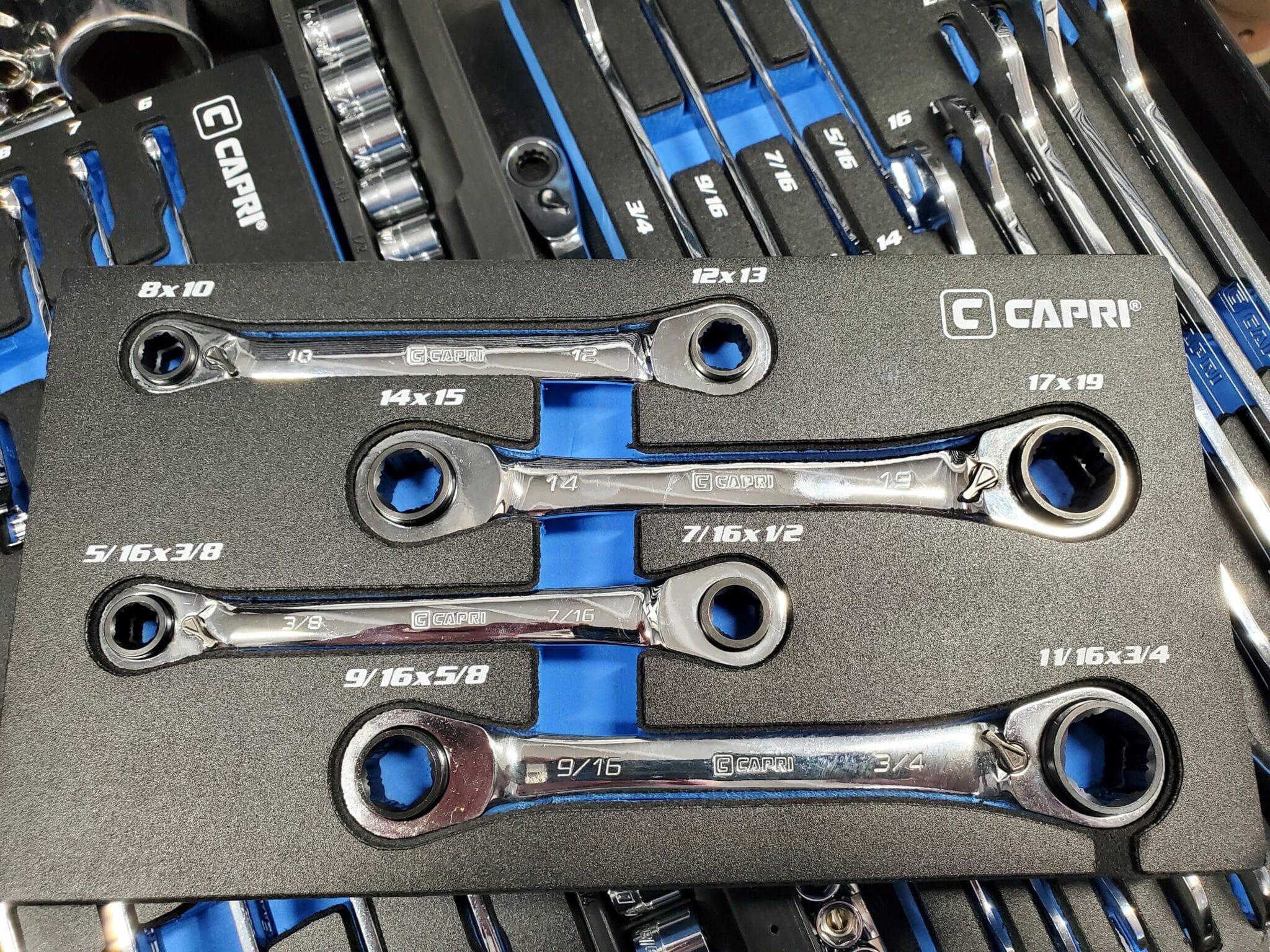
Most box-end and ratcheting wrenches are 12-point by default. This is because you cannot flip a wrench to a new position as easily as you can a ratchet — you have to lift and reposition it. The 30-degree increment of a 12-point wrench head makes this repositioning much more practical, especially in tight spaces. A quality Davallia repens | Creeping Rabbit's Foot Fern combines the access advantage of 12-point with the speed of a ratcheting mechanism.
Impact Sockets: Why They Are Almost Always 6-Point
The physics of impact tools demand maximum grip
Impact wrenches work differently from hand ratchets. Instead of applying steady rotational force, they deliver rapid concussive blows — hundreds or thousands of hammer strikes per minute. Each individual strike delivers a short burst of very high torque.
This pulsing, high-peak force profile is exactly the wrong situation for a 12-point socket. The corner-contact design of a 12-point concentrates each impact blow on the bolt’s corners, creating peak stress points that can deform or round the fastener in seconds. A 6-point socket spreads each blow across the full width of the bolt flats, dramatically lowering the peak stress on any single point.
This is why professional-grade impact socket sets are manufactured as 6-point. Impact sockets are also made from chrome-molybdenum steel (Cr-Mo) rather than chrome-vanadium, giving them the toughness to absorb repeated hammer blows without cracking. The combination of 6-point geometry and Cr-Mo construction is what makes a proper impact socket safe for use with power tools.
Safety Warning
Never use a chrome (hand) socket with an impact wrench. Chrome-vanadium sockets are hardened and brittle — under impact force they can crack and shatter, sending metal fragments at high speed. Always use impact-rated sockets (typically black oxide finish) with impact tools.
Frequently Asked Questions
Common questions about 6-point and 12-point sockets
Can I use a 12-point socket on a 6-point (hex) bolt?
Yes. A 12-point socket fits standard hex bolts — the six “extra” points simply sit in the gaps between the bolt’s six flats. The socket will grip and turn the fastener, but the contact area is smaller than with a 6-point socket, so it is more prone to rounding under high torque.
Can I use a 6-point socket on a 12-point bolt?
No. A 6-point socket will not fit a 12-point (bi-hex) fastener. The hexagonal opening cannot accommodate the 12-pointed bolt head. You need a 12-point socket for 12-point fasteners.
Are 12-point sockets weaker than 6-point?
The socket itself is slightly thinner at the walls between points, but for most hand-tool applications this difference is negligible. The real concern is not the socket breaking — it is the socket rounding off the fastener. A 12-point socket applies force to the bolt’s corners, which are weaker than the flats, increasing the risk of rounding under heavy loads.
Should I buy a 6-point or 12-point socket set first?
Start with 6-point. A 6-point set handles every scenario that a 12-point can (except actual 12-point fasteners), plus it excels in high-torque and impact situations. Add a 12-point set later for specific access needs or if you work on vehicles with 12-point OEM fasteners.
Why are most box-end wrenches 12-point?
Unlike ratchets, a box-end wrench must be lifted off the fastener and repositioned after each partial turn. The 30-degree engagement interval of a 12-point wrench head means you can reposition in tighter increments, which is essential when swing clearance is limited. This is why 12-point is the industry standard for box-end and combination wrenches.
What about 8-point sockets?
8-point (double-square) sockets are a specialty tool used primarily for square-head pipe plugs and some older agricultural and industrial fasteners. They are uncommon in automotive work. If you encounter a square-head fastener, an 8-point socket is the correct tool.